I recently finished a little proof of concept tiger game that uses facial feature detection, and it triggered some confusing feelings.
When it comes to AI, I am a “Consult ChatGPT but do the thing myself” kind of user. It started no different this time: Google’s library for facial detection has awful documentation, and Chad G. Petey was instrumental in digesting it for me.
I ended up directly copy-pasting more code from ChatGPT than usual, but… OK, I let this one slide because of how terrible the documentation is.
After the technical bit it was time for graphics. And that’s when I hit a wall.
It would be so easy to just prompt the graphics into being.
After all, it’s just a throwaway concept.
Like, here, I just did it now. It took one minute:

So, I was fine with ChatGPT explaining concepts to me and with copy-pasting a bunch of Javascript but this was a step too far. Why was this my red line?
I have a confession to make: I never liked Javascript.

I hate the confusing event-driven nature of it. The fact that you can’t sleep() like in a normal programming language. I tried to learn Node 10 years ago and the “Callback Christmas Tree” of functions made me want to kill mice elf 🧝. The fact that CSS properties have slightly different names in JS, and the fact it didn’t have querySelector() until 5 minutes ago (ok, I’m dating myself) – ugh!!!
And don’t get me started on CSS. I was excited when CSS became a Web standard because it was a slog to create rounded corners with HTML tables & images (super-dating myself here). But then, mobile-compatibility, the CSS grid, the inability to centre things vertically, etc. came into the picture. The endless finicky shifting of things on the page to get them pixel perfect – it’s the worst part of web development.
And Python. I don’t like Python either.
Never sat down to study it systematically. So I’m always on the back-foot looking up what things mean.
You get the idea. So when someone came and said there’s a ✨Magical Genie✨, who I can give over all these annoying development tasks to. And it just does it … I was over the moon. I am still over the moon – I can just get on with projects, instead of twiddling with all the annoying parts that slowed me down.
But genies charge a price.
I want to talk about how Elliot Bonneville turned his blog into a rendering engine.
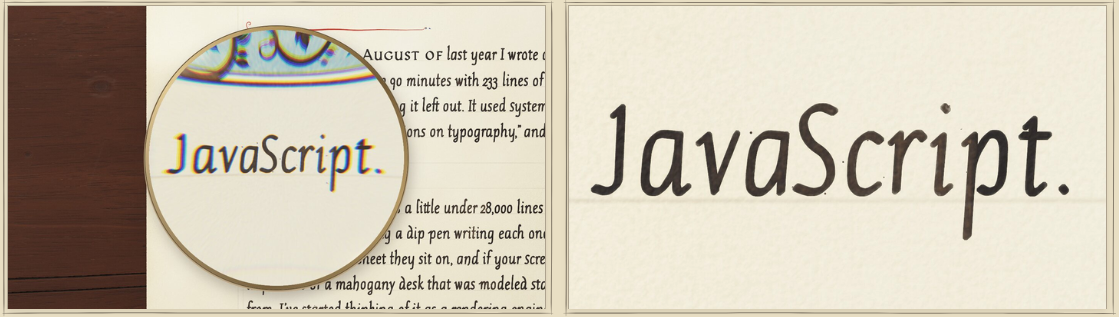
He used Claude and Fable to make something that strikes me dumb. Go read the article. He created a font that simulates the way in which ink and quill leave marks. Each letter is rendered on the fly in a randomized way.

It’s such a satisfying font. So pleasing.
There is a loupe (with chromatic aberration at the edges!) and it lets you zoom in on the letters. That triggers a special re-render that adds little ink splotches and unevenness in the amount of ink.
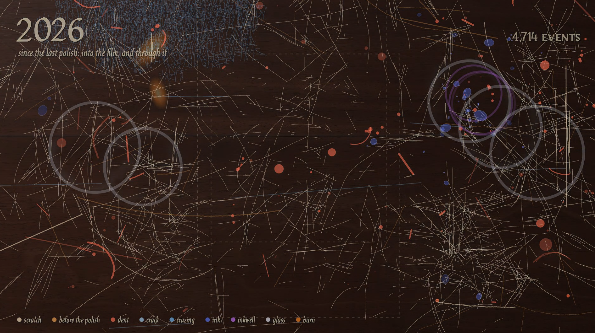
The background is a 3D rendered wooden table. With a history of damage, stains and scratches. Simulated according to academic papers on tree train. Like, this is fractally amazing. Gorgeous.
Except.
Except I don’t actually know Elliot any better:
- Is he the kind of person who reads SIGGRAPH papers on rendering realistic wood models? Or was that suggested by Claude?
- Is he a calligraphy buff? All those things he said about the physics of ink pooling, tines separating and the speckling – am I listening to a person’s lived experience? Or some Claude regurgitation?
- When I look at the website: why can’t I see the table grain? Why does the loupe only appear on Mobile? Why does every page spend a long time re-rendering on every refresh? Does Elliot care about the craft behind this?
When I compare my own coding skills to modern LLMs, I could never accomplish something like this. This makes me feel down.
But then, why should I care about AI’s skills? I’m sure that Elliot’s own human coding skills were way beyond mine to start with. And that never bothered me before. There’s no “you’ll be left behind forever” feeling from the fact another person could do better than me. So why the sour feeling now?
And, well, the aesthetic sensibility of the work is definitely Elliot’s… Right?!
Or was the whole thing a Claude suggestion?1
Imagine if Elliot just went ahead and wrote out his posts with pen and ink, and photographed them as-is on his ancient tabletop. A lot of these questions would be eliminated.
This is beautiful, but I am left clueless about the person behind it.
Imagine a medieval monk who’s transcribing a book of prayer. He’s creating a copy on vellum. If an evil genie showed up and just did it for him, would God still be honoured? What would the evil genie’s price be?
How about if a non-evil genie showed up and just did it for him – would God be honoured? Would something be lost by the monk not having to trace those words himself? What if this was the monk’s 10th same copy of this book of prayer so there was nothing new to learn from the act of copying?
What if, instead of a genie, the monks typeset the prayers on a printing press and made 10,000 copies of the book? Would God still be honoured? Would the benefit of more mass prayer make up for the lack of human effort in copying?
This must’ve all been hashed out to death back in the 1500s.
I think what’s happening with AI is similar. Except God is not involved and the evil genie is exacting a price that we can understand: deskilling, detachment from the work, the inability to connect with a person because you can no longer judge the effort that went into their work. Decoherence.
An evil genie came to me with with an “I don’t care” bin. I can dump all the awful CSS, Javascript and Python into the bin.
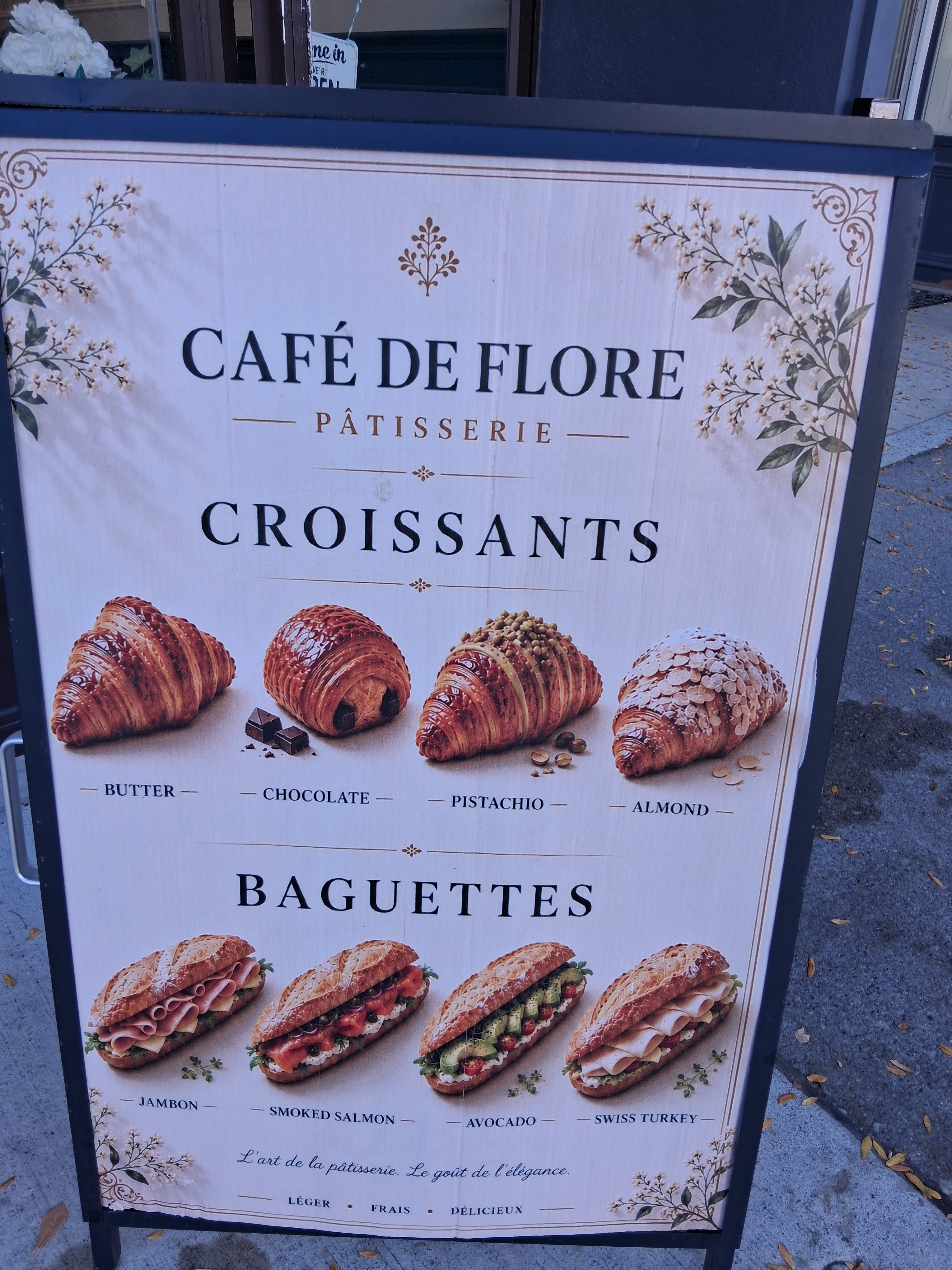
At work, many of us have been dumping emails, Slack messages, presentations and meeting prep into it. Large corporations have been dumping “customer support” into the bin. Young people have been dumping their homework into the bin. My local cafe dumped their signage into the bin.
It’s ok to throw your hands up and say “I don’t care”. Sometimes.
But the more you say “I don’t care” the more you get in the habit of not caring. And then you slide into “I don’t care mode” all the time. And that’s a problem.
If you came here expecting a neat conclusion or a recommendation – ZOINKS! – I don’t have one for you.
All I have to offer is more confusion.
For my tiger game, I considered drawing original graphics in Photoshop (super time consuming); drawing them with watercolours (just time consuming); and doing stop-motion animation (couldn’t find a good plastic tiger at the dollar store 🙁).
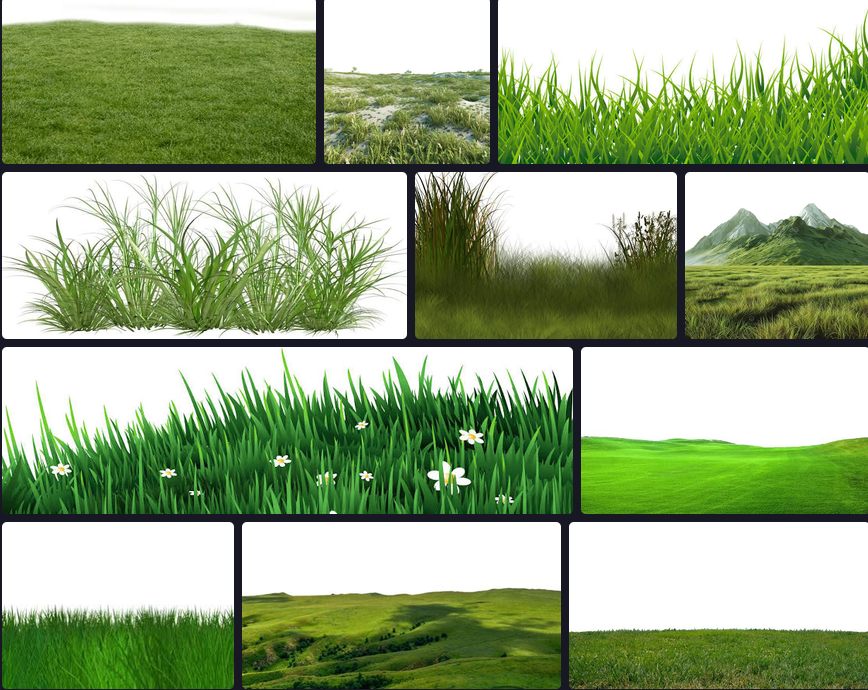
Eventually I magpied some transparent .PNG images of grass. I got tiger images from Wikimedia Commons and used Canva’s free AI background removal tool to cut them out of the background (was that an “OK use of AI?!”… I don’t know. I know I didn’t have a crisis over it.)
My game came out delightfully janky. I leaned into the vibe by adding intentional misspellings. It looks like trash. Its “an aesthetic”. It somehow felt more like my own work than it would’ve felt if I AI-generated the imagery.
What are your thoughts?
Where did you draw the line?
Send me an email.
- A good example where “human taste” and AI get muddled: Felix Rieseberg’s website. I thought that Felix has a strong aesthetic and is steering the AI. But… I don’t have a good intuition for Claude’s aesthetic. Some people online think that Claude is the mastermind behind Felix’s website, saying:
“The website, to me, looks like Claude’s project with sprinklings of the author’s intent, and not the other way around.” ↩︎