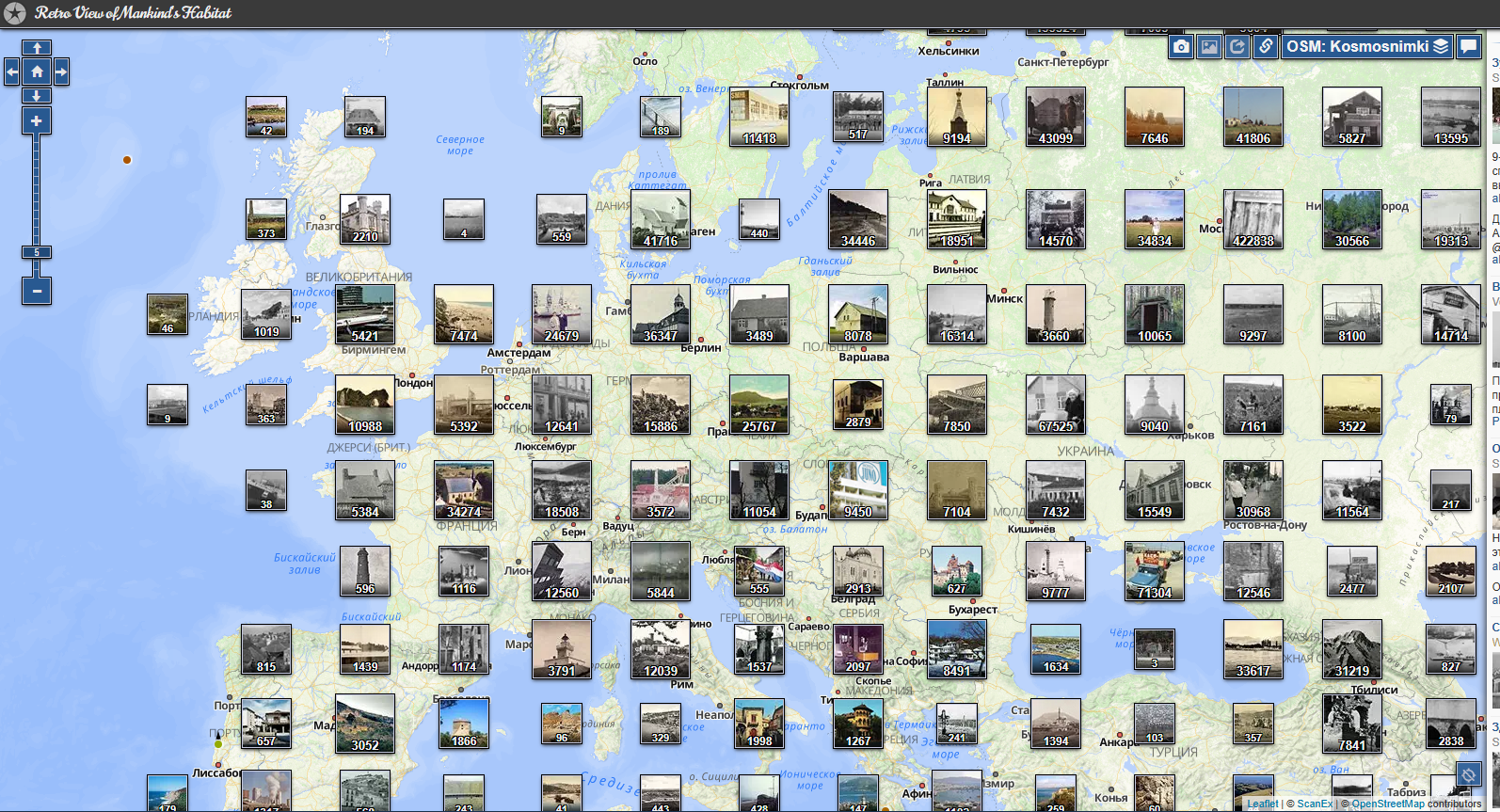
PastVu is a great site for finding historical photos from specific locations on a map. The interface is only partly in English, but it is easy enough browse the map to find pictures in a specific area.
There is also a slightly-confusing search function. Here is an example link to a filter specifying images from Tashkent between 1993 and 1999.
While PastVu is particularly rich in pictures from Eastern Europe, there are many user-contributed photos covering North America and other regions.
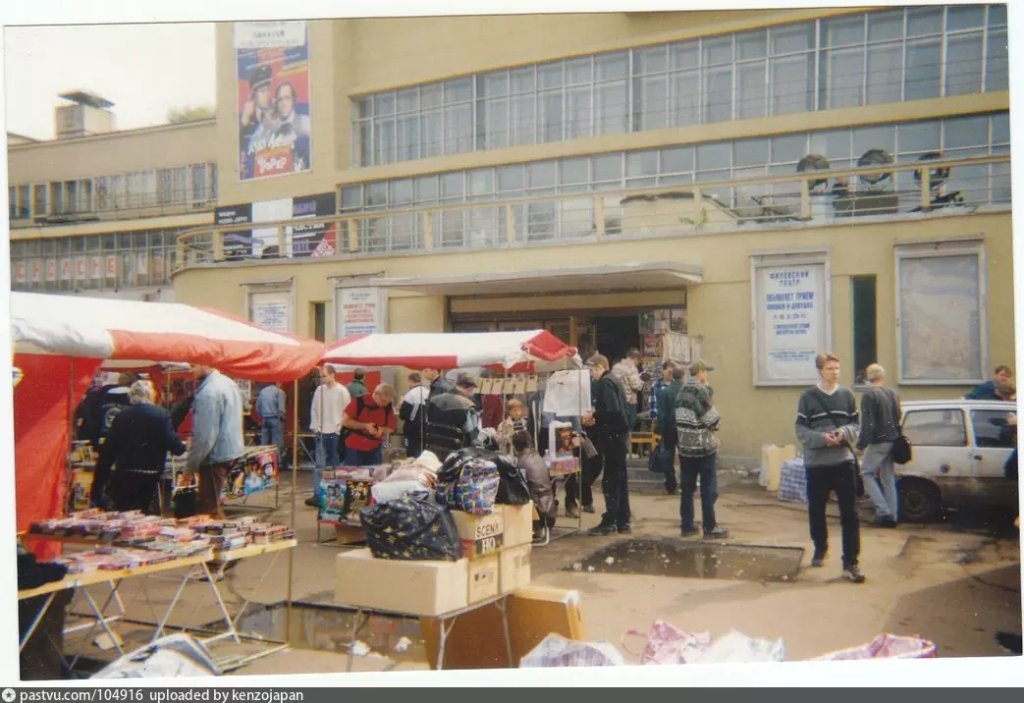
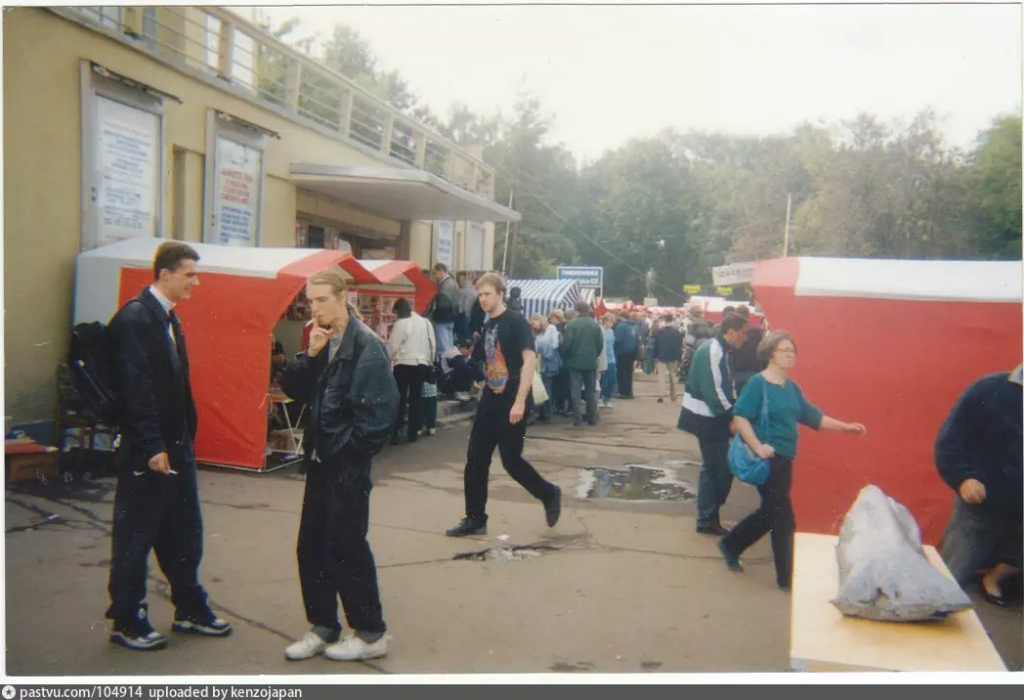
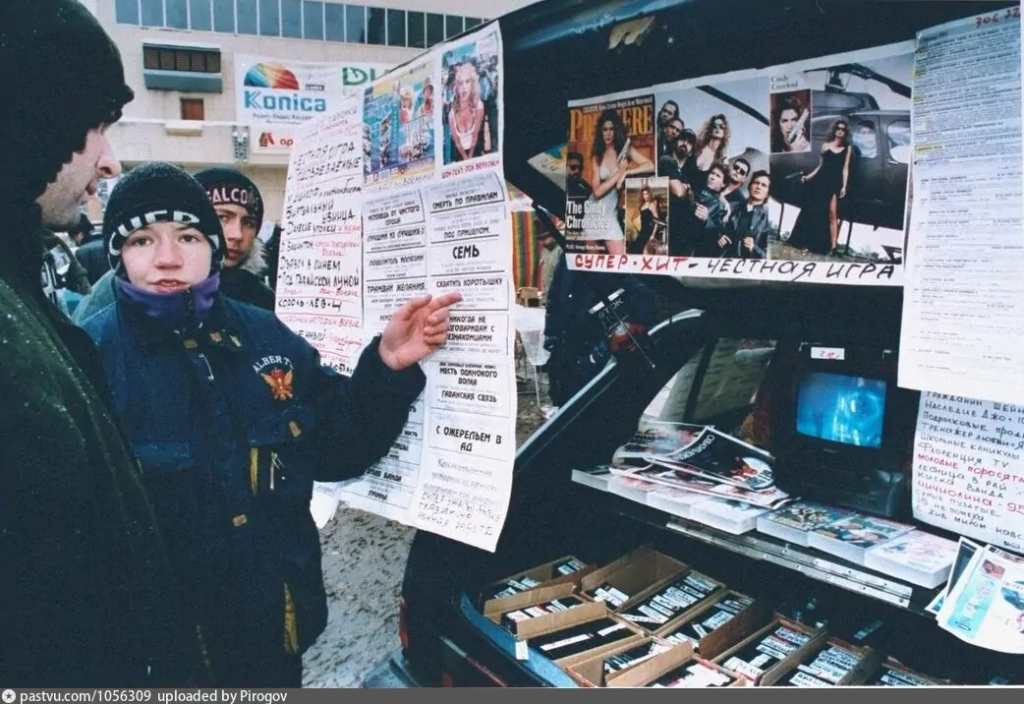
Here is an example of the kind of pictures you’ll find – these are from a 1990s Moscow market that specialized in bootleg software and VHS tapes:
The market was called “Gorbushka” (Горбушка).
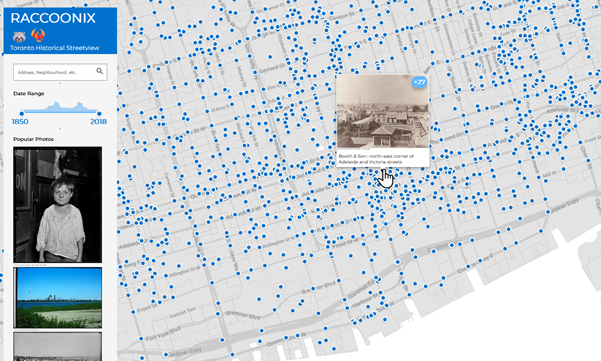
For a similar “Wayback StreetView” experience covering Toronto, check out OldTO.org.
We’ve baked the concept of “countries” into the Internet domain system. And that makes domain names tied to real-world territorial conflicts, countries splitting apart and countries going underwater (like Tuvalu)
.yu is an early example of something that will happen more and more often.
It is unfortunate that we didn’t preserve the .yu domain space like a nostalgic Internet memorial to the country. Instead, the sites became unmoored and unreachable.
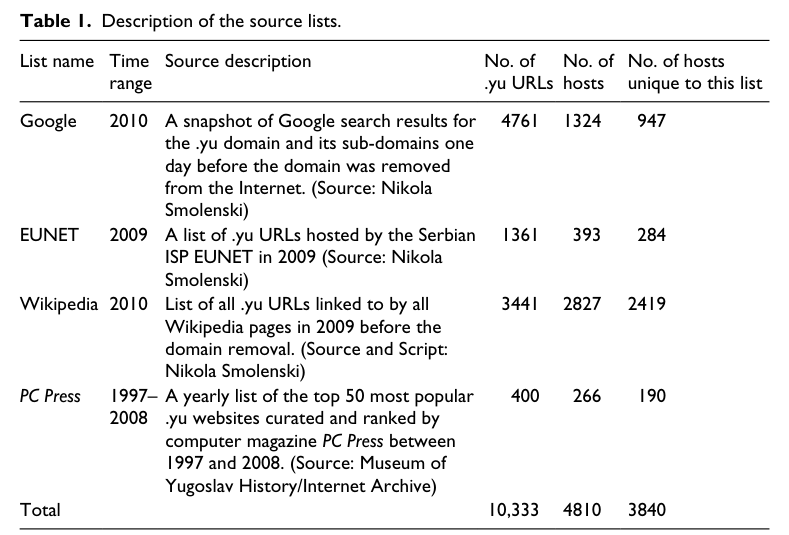
Kaloyan referred to the research paper “What does the Web remember of its deleted past? An archival reconstruction of the former Yugoslav top-level domain” by Anat Ben-David. In that paper, Ms. Ben-David reconstructed a network graph of .yu domains from the Internet Archive’s Wayback Machine.
Ben-David’s paper used the below sources as seed lists:
By crawling links from these pages to other .yu URLs, she eventually found 17,460 unique websites in the .yu domain.
The adventure begins
Dear Reader: after hearing all this, I bellowed out a mighty
Akshuallyyyyyyyy!
I dropped my bag of mini M&Ms onto the house robe I was wearing. Unshaven and red eyed, I yelled up from the basement: “MOM, fire up the router! I’m going on an Internet Adventure!!!!”.
You see, I figured I was good enough to discover all the archived domains under the .yu TLD. After all, last time I had an akshually moment, good things happened!
At first I tried doing a wildcard search for all *.yu domains at the Wayback Machine. That didn’t work.
The CDX API – a dead(ish) end
Then, I discovered that the Wayback Machine has a “CDX Server” API that can tell us if a page is archived or not.
Below is an example of a CDX query that grabs all the unique file paths at the domain “jacobfilipp.com”, filters them down only to HTML files that were successfully fetched (status starts with a 2), and shows you only the first 10 that are archived at the Wayback Machine.
Unfortunately you can’t easily fetch all archived URLs under the TLD “.yu”. However, if you try, you get a message that says “Forbidden: This type of CDX query requires authorization.” Which tells me that you could do this if you politely ask the staff at the Internet Archive.
What does work is fetching all the files under the Yugoslavian subdomains like *.co.yu and *.org.yu and *.ac.yu.
Here is an example of fetching all the URLs under *.co.yu:
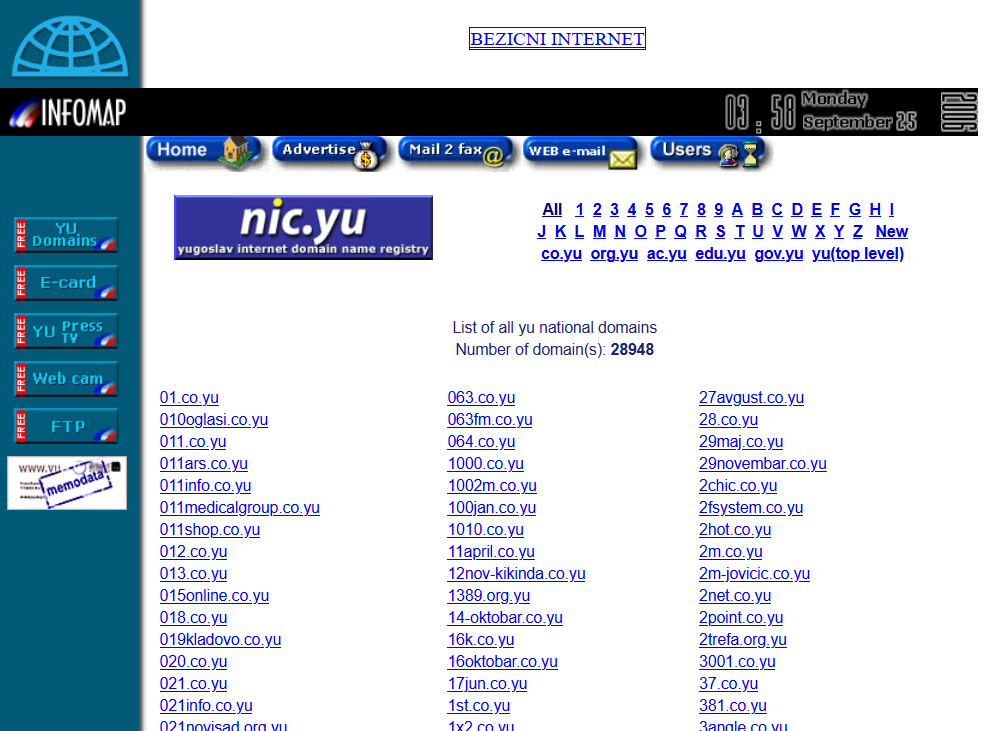
I went ahead and used my newfound CDX skills to download a list of all indexed “domain listing” pages. Not all of them are in the Wayback Machine: most listings stop at “page 20” of each letter.
Then, I downloaded all those pages locally using wget (use the id_ URL trick to get a page with un-altered URLs), and extracted all the .yu domain names from the links inside.
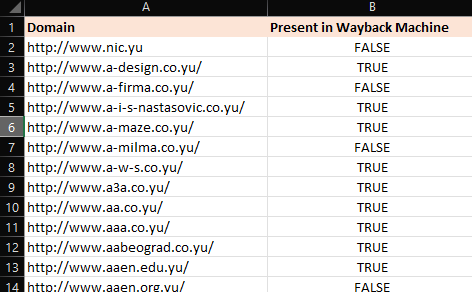
Finally, looping through each domain name, I used the CDX endpoint to check whether the domain is in the Archive or not.
End result:
21,864 domains with 13,292 of them having an archived copy in the Wayback Machine.
While writing this post, I realized that the parent of www.yu – memodata.net – also has a list of domains. Theoretically it is the same list of domains. But, practically, the Wayback Machine might have indexed alphabetical listing pages that it didn’t index for www.yu. You’d have to grab all the listings pages using the CDX API and extract the domains.
If you really need more .yu domains, Nikola Smolenski and Anat Ben-David are easy to find online. You should ask them nicely – I bet they have their lists saved somewhere.
Back in 2018, Google’s “Sidewalk Labs” was trying to romance Toronto into creating a dystopian surveillance neighbourhood because progress.
As part of their charm offensive, they created “oldto.sidewalklabs.com”. It was a kind of Google Streetview with back-in-time photos of different locations in Toronto. The photos were sourced from the City of Toronto’s Archives and the Toronto Public Library.
It turns out that the site was already revived at oldto.org, by the fantastic Back Lane Studios team. They put on various events that have to do with documenting Toronto’s history.
As of today (March 2, 2026) my site includes Toronto Public Library images that oldto.org does not – but I will be sharing them with the BLS team.
Future work:
Next, I will attempt to find updated links to each photo on the City of Toronto Archives – all their item links are broken.
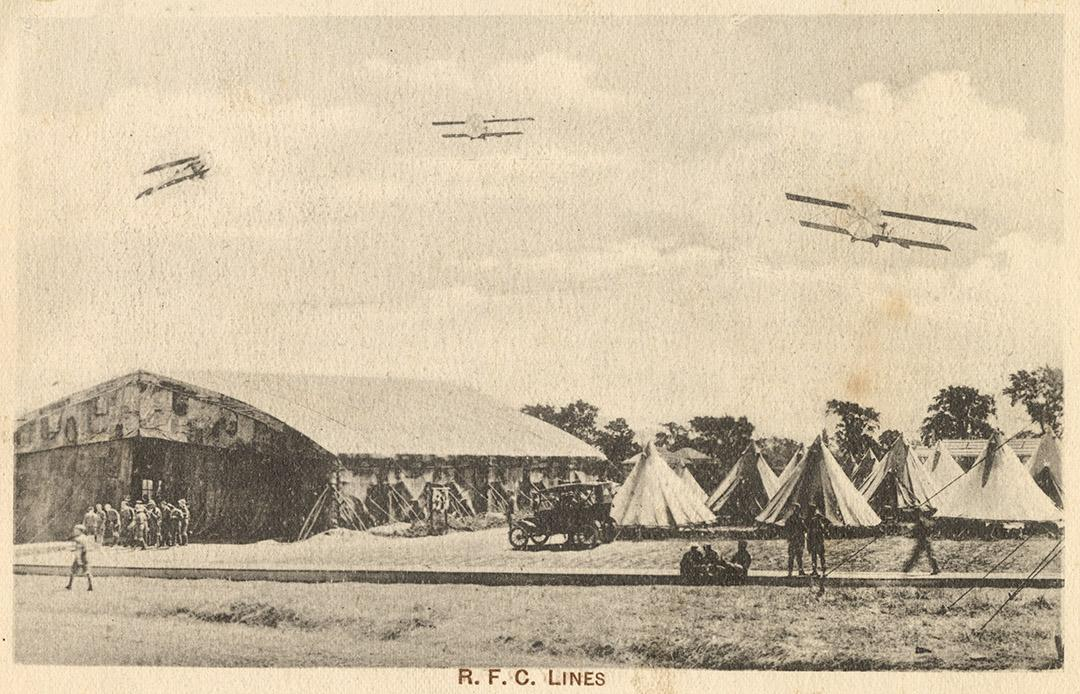
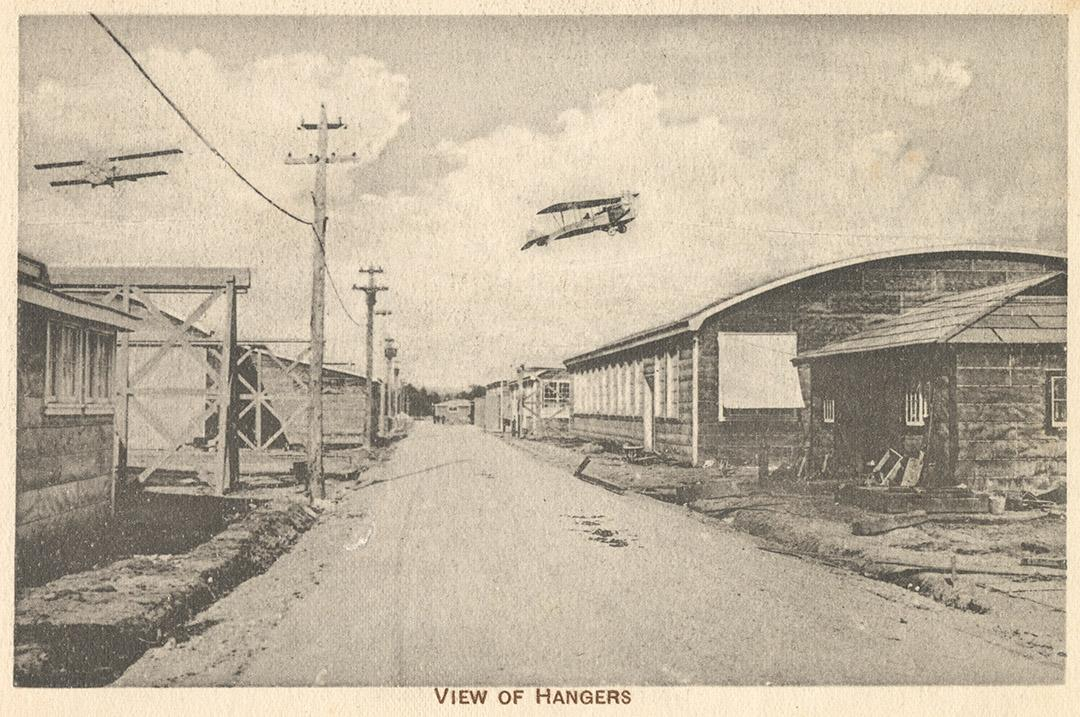
I would like to also fill in the picture gaps for the fascinating Leaside neighbourhood – home to an aerodrome and other aviation enterprises.
This is where you can find metadata for the 187,407 records stored in the Digital Archive of Ontario. 3,174 of those records have digital images hosted on my site, and available for download.
I’ve been working on a project that required this data. The Digital Archive serves it up in chunks, and I decided to make it available publicly as 1 file. This data was downloaded on February 11, 2026. Get the data here:
this is the same field as the “object number” on the item’s official webpage
primaryMedia.value
If you change the endings of the URL to /full, /thumbnail and /preview then you will get 3 different image sizes
displayDate.value
Values don’t have a set format. You will see blanks, and values like: 1850 7/18/1985 1827-1838 approximately 1918 n.d. March, 1985 27 June 1990 October 27, 1986 unknown
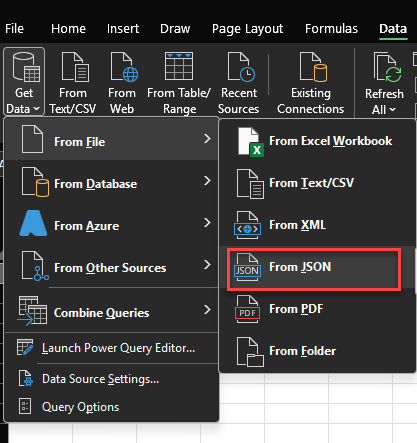
Microsoft Excel can open JSON files and turn them into tables. If you’d like to do that, go to Data > Get Data > From File > From JSON
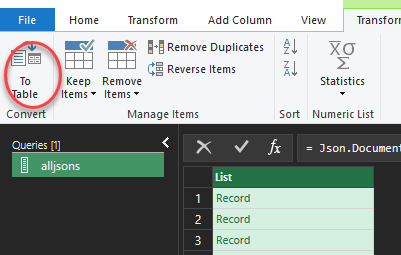
Then choose your file, and turn “To Table” in Power Query
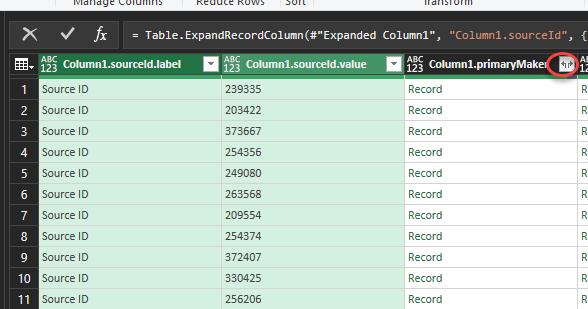
Your “List” column will get a little “left + right arrow” icon on it, click it and click OK to “expand” the underlying fields in each row
A bunch of new columns will appear. Go through the same process, expanding each column:
When done, click “Close & Load”. You will get the whole dataset as a familiar Excel sheet:
As you might know, I am the web’s foremost expert on QTVR restoration. (I’m joking. But maybe it’s true?!). So I couldn’t resist sprucing up those old panoramas for easy viewing online.
Village square of Gruyères, Switzerland and upward path to the MUSEUM HR GIGER
Nighttime view, village square of Gruyères and upward path to the MUSEUM HR GIGER
Entrance to the MUSEUM HR GIGERand courtyard in front of the Giger Bar
Entrance foyer and Museum Store area
Room No 4 Alien’s Room Paintings and sculptures, designs for the Ridley Scott film “Alien” 1978, and sketches for the film “Alien3” (1990)
Room No 5 Erotic sculptures, drawings and sketches
Room No 6 “The Spell” paintings, major works from the 70’s
(I was surprised by how large Giger’s canvasses are – this explains how he could get so much level of detail into his pictures.)
Room No 7 Key paintings from the 70’s
Room No 8 Paintings from the “Victory” and “Landscapes” series (between 70’s and 80’s)
Room No 10 The 1980 “Oscar” for the film “Alien”
“Daydream” paintings, a collaborative series by HR Giger, Claude Sandoz and Walter Wegmüller
Room No 12 “Harkonnen” furniture created for the film “Dune”
(Nice carpet)
Room No 13 Designs (done as airbrush paintings) for the film “Poltergeist II” (1985)
Sketches for “The Mystery of San Gottardo”
Room No 14a Various paintings, including “Necronom IV” and “Necronom V”, Maxiwatches, and furniture designed by HR Giger
(I like the little aged “religious icons” over the door in this one)
Room No 14b Original 3D sculpture for the limited edition “Spieces” print, paintings, including the “Passages” series
Room No 16 HR Giger’s private collection : Ernst Fuchs, Jean Poumeyrol, Arman, Abati, Joe Coleman, Dado, Friedrich Kuhn, Andre Lassen, Steve Leyba, Venosa, and more…
Jean Midolle was a French calligrapher and graphic artist, most active in the years of 1830-1846. There is a great article at The Letterform Archive about Jean and the work behind his fonts/chromolithographs.
Here are some high-quality scans of his work. I’ve saved a copy of them to this website, just in case they disappear off the internet in the future 🧙♂️✨
The old Mailchimp blog had several classic articles about email. These articles were data driven, and many were written by the fantastic John Foreman (whose book and talk I recommend).
These articles were scrubbed from the Internet. So here they are again, for private reference:
John Foreman
A Purchased List is a Dead List
Jul 24, 2014 MailChimp prohibits using purchased, rented, or scraped email lists, which are now illegal in Canada under CASL and violate their acceptable use policy. Such lists perform poorly, leading to low engagement and high complaint rates.
AOL and Hotmail Users Spend More than Gmail Users, and Other Research Finds
Jan 8, 2013 MailChimp’s 2012 research highlights reveal that Hotmail users tend to spend more than Gmail users, likely due to an older demographic with more disposable income. Additionally, daily deals emails have low engagement but also low unsubscribe and abuse rates, while purchased email lists result in significantly higher complaint rates, leading to potential ISP blocks.
Comacast and Gmai: all your typo email are belong to us
Dec 20, 2011 Typos in email addresses, especially in domains, can lead to successful delivery to typosquatting sites, which may result in security risks or misuse of your content. It’s crucial to watch for these errors and consider using double opt-in to ensure list quality.
Competing with the World Cup for Subscribers’ Attention
Jul 9, 2014 The 2014 World Cup significantly impacted email marketing engagement, with noticeable drops in activity during games and peaks before and after matches. Marketers should consider their subscribers’ time zones and avoid sending important campaigns during major events to maintain engagement.
Detecting Click Clusters in Your Data Using Spreadsheet Math
May 15, 2013 Most people segment their email lists based on predefined criteria, but there’s potential in allowing the computer to analyze data and suggest segments based on subscriber clicks. By employing data mining and unsupervised learning, we can uncover new insights and optimize our email marketing strategies.
Digging Deeper into Wavelength and EGP Data: Finding Interest Clusters in MailChimp’s Network
Oct 23, 2012 MailChimp’s Wavelength tool analyzes subscriber data to identify interest clusters among users, enhancing targeted marketing efforts. By employing cosine similarity calculations, it reveals how closely related different subscribers are, uncovering unique audience segments and insights for improved engagement strategies.
Effect of Social Networks on Email Engagement
Feb 22, 2011 The article discusses how social networks can enhance email engagement, emphasizing the importance of diverse content sharing on platforms like Twitter and Facebook. Research indicates that incorporating social elements in emails can lead to increased engagement, suggesting that marketers can effectively blend email and social strategies for better results.
Fun with Data Science
Dec 7, 2011 The article introduces John, a data scientist at MailChimp, who analyzes email campaign performance through geographic distribution using advanced algorithms like clustering and dendrograms. His findings reveal significant insights on list performance, such as the correlation between subscriber locations and bounce rates, as well as the benefits of utilizing newer email domains for better engagement and deliverability.
How Gmail Tabs Affect Your Email Marketing: An Update
Dec 12, 2013 The article discusses the impact of Gmail’s tabbed inbox on email marketing, revealing that while open rates have decreased significantly for Gmail users, the system appears to help users manage their inboxes effectively, as unsubscribe rates remain stable. Additionally, it highlights variations across industries, suggesting that marketers may need to adjust strategies to engage subscribers better.
Inactive Subscribers are Still Valuable Customers
Feb 9, 2016 The article emphasizes that inactive subscribers, while not actively engaging with emails, still hold significant value for businesses. They contribute to revenue, purchase more frequently, and are less likely to churn compared to non-subscribers, suggesting that businesses should focus on re-engagement strategies rather than removing them from email lists.
Insights from MailChimp’s Send Time Optimization System
Jul 14, 2014 The article discusses MailChimp’s Send Time Optimization (STO) feature, which recommends optimal sending times for email campaigns based on individual engagement data. It highlights key insights such as weekdays being preferable for sending, a peak time of 10 AM, and the importance of understanding the audience’s characteristics, like age and occupation, for effective email timing.
Introducing Hairball v2: Hairball with a Vengeance
Apr 9, 2012 The article introduces Hairball v2, an updated version of the Adobe Air application designed for complex list segmentation in MailChimp, allowing users to perform advanced analysis of campaign performance and recipient engagement. Key features include improved segmentation based on historical data, performance comparison, and more precise filtering of click data to enhance targeted marketing efforts.
Introducing Wavelength
Jan 18, 2012 Introducing “Wavelength,” a MailChimp service designed to help users find similar publishers by analyzing their email lists. It emphasizes the importance of building organic, permission-based email lists instead of purchasing them and outlines how Wavelength can connect users with relevant newsletters based on subscriber overlap.
MailChimp’s Email Genome Project
Feb 9, 2011 The MailChimp Email Genome Project aims to analyze user data to improve email marketing effectiveness and deliverability. By examining patterns from millions of subscribers and emails sent daily, MailChimp seeks to address common dilemmas in email marketing and prevent abuse of the email ecosystem.
Multivariate Testing for MailChimp Pro
Sep 17, 2015 The article discusses MailChimp’s new Multivariate Testing feature, which allows users to test up to eight different elements of an email simultaneously to enhance customer engagement and marketing strategies. It emphasizes the importance of data-driven decisions and provides insights into effective testing practices and reporting metrics to optimize email campaigns.
Project Omnivore: Declassified
Jan 27, 2010 MailChimp’s Project Omnivore, initiated in late 2008, aimed to create a scalable tool to detect spam, particularly from well-meaning marketers unaware they’re spamming. By utilizing advanced genetic optimization techniques and massive data analysis, Omnivore assesses email campaigns and user behavior, sending warnings or suspending accounts for suspicious activities, while still relying on human review for final decisions.
Project Omnivore: Three Years of Gorging on Data
Nov 13, 2012 This article discusses Project Omnivore, which MailChimp launched to monitor and analyze email list quality and sender behavior. By utilizing an AI model that evaluates email addresses based on extensive historical data, Omnivore helps ensure a healthier email ecosystem while allowing legitimate users to send emails without unnecessary barriers.
Research: Spammy Email Design Mistakes
Oct 13, 2010 The article discusses an experiment by MailChimp that analyzed email campaigns flagged as spam by reviewers from Amazon’s Mechanical Turk. It identifies common design mistakes that lead to false positives, such as overly sales-oriented text, poor layout, and reliance on stock templates, ultimately providing insights into effective email marketing design.
Send Time Optimization in MailChimp
Dec 3, 2013 This HTML document outlines the “Send Time Optimization” feature introduced by MailChimp, which helps users identify the best times to send emails based on subscriber engagement data. The optimization takes into account global email engagement trends and specific subscriber history to improve click-through rates, particularly focusing on the most engaged audience segments.
Sending Frequency: More Is Not Always Better!
Apr 23, 2013 This article discusses the misconception that sending more emails leads to greater engagement and revenue. It emphasizes that increased email frequency negatively correlates with engagement per campaign, suggesting an optimal sending frequency to maximize total clicks rather than simply increasing volume.
Smarter Bounce Management Rules with Engagement
Sep 1, 2010 The article discusses the challenges of managing email bounces for Email Service Providers (ESPs), emphasizing the distinction between hard and soft bounces and the complications that arise from server errors and deceptive bounce messages. It highlights the importance of effective bounce management for maintaining domain reputation and outlines MailChimp’s strategy of incorporating engagement metrics into bounce cleaning decisions to improve deliverability and list management.
Subject Line Data: Choose Your Words Wisely
Nov 13, 2013 This article analyzes the impact of subject line wording on email open rates, revealing that even a single word can significantly affect engagement. Key findings include the effectiveness of personalization, urgency, and certain keywords, highlighting the importance of choosing words wisely in email campaigns.
Subscriber Engagement Half-Life
Feb 18, 2011 The article discusses findings from Dan Zarrella’s webinar on email marketing, revealing that the average click rate for subscribers significantly drops below 1% after four months. To maintain engagement, marketers must entertain and deliver value quickly while continually attracting new subscribers to offset potential churn.
Subscriber Engagement Over Time
Nov 25, 2013 The article analyzes subscriber engagement over time using extensive data, finding that click rates start above 5% and decline to around 3.5% after multiple campaigns, with differences observed across industries and email domains. It emphasizes the importance of subscriber context and preferences in shaping engagement, recommending strategies like double opt-in to enhance initial interaction levels and maintain interest.
This Just In: Subject Line Length Means Absolutely Nothing
Sep 17, 2012 The article explores the misconception that the length of email subject lines significantly affects open and click rates. Analyzing data from 12 billion emails, it concludes that there is no meaningful correlation between subject line length and engagement, emphasizing the importance of personalized content over gimmicks or strict length guidelines.
Update on Omnivore, new 3 Strikes Rule
Aug 27, 2010 The article provides an update on MailChimp’s Omnivore program, which is designed to combat email abuse by analyzing user behavior and implementing anti-spam measures. It discusses the new “Three Strikes” rule, stating that if any sender is suspended three times within six months, their account will be permanently shut down, aiming to enhance the overall integrity of the email ecosystem.
What Does Your ISP Say About You?
Nov 26, 2013 This article explores how email addresses can reveal insights about individuals, including their likely age and interests based on the email domain used. It analyzes various domains such as Gmail, Hotmail, Yahoo, AOL, and Comcast, showing how different demographic characteristics and preferences can be inferred from users of these services.
What Good Marketers Can Learn from Spammers
Oct 18, 2012 The article discusses what effective marketers can learn from spam emails, specifically highlighting that while spammers often use a single clear call to action and few distractions, marketers should balance word count, image count, and URL count to optimize click rates. The research indicates that campaigns with concise content and relevant links tend to perform better than those with excessive text or images, ultimately suggesting that quality and clarity are key to successful email marketing.
Where Have All the Government Clicks Gone?
Oct 15, 2013 The article discusses the impact of the 2013 U.S. government shutdown on email engagement among government employees, noting a significant drop in interactions from affected agencies. It highlights how the furloughs led to decreased activity, contrasting it with unaffected agencies like the SEC, which saw increased engagement during the fall marketing season.
This is a collection of ukio-e prints from the Royal Ontario Museum. It’s called “Album of prints from Manners and Customs of Women” (Fujin fūzoku zukushi 婦人風俗尽).
Credit Line: Gift of Mrs. A. Ledingham in memory of Miss Martha Julia Cartmell, pioneer missionary to Japan
My favourite is the image to the right – “a courtesan departs” – but so many of these are fantastic. For more ukio-e prints, go to https://ukiyo-e.org/ and scroll down the page. For more cool objects from the ROM Digital Collection, click here.
Note from Dec. 8, 2024: In many Japanese prints of courtesans / “pretty women”, the women’s faces are simply drawn while the hair is drawn elaborately. I believe this is telling about the part of the anatomy that men in the 1700s – 1800s cared about. (The prints above aren’t done in that “pinup” style, and that’s a big part of why I like them).
Here’s a small look at how complex women’s hair styles and accessories could get, from this 1885 book:
Note from June 6, 2025: More hair stuff! “Tose Kamoji Hinagata” hair catalogue by the illustrator Abe Gyokuwanshi. From this eBay listing.
The Mira Calligraphiae Monumenta is a “Model Book Of Calligraphy” created in 1561–1562 by Georg Bocskay – court secretary to the Holy Roman Emperor Ferdinand I. It was illuminated 30 years later by painter Joris Hoefnagel illuminated the book. The result is “… one of the most unusual collaborations between scribe and painter in the history of manuscript illumination.”
The Getty Museum Collection digitized the book and made it available online – but their viewer app is restrictive. I’ve made it simpler to view & download below. Note that clicking an image below will bring up a detailed 13Mb version of it. The work is in the public domain – so you can do anything you want with it.
MSDN Magazine was available as a print magazine in the United States, and online in 11 languages. The last issue of the magazine was released in November 2019.
So… why make an archive of MSDN Magazine here? Despite being a Microsoft property, the archived versions on their website are falling victim to link-rot: code downloads are impossible to get, people don’t know how to open the .CHM file format for the older issues, etc. So I went ahead and made a simple archive below: