MSDN Magazine May 2004
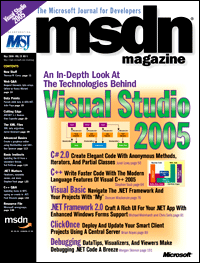
C# 2.0: Create Elegant Code with Anonymous Methods, Iterators, and Partial ClassesC# 2.0 introduces a wealth of exiting new features, such as generics, iterators, partial classes and anonymous methods. While generics are the most talked-about feature especially for former classic C++ developers, the rest of the new features are important additions to your .NET development arsenal, enhancing power and improving overall productivity. This article is dedicated to all the new C# 2.0 capabilities besides generics to give you a good overall picture of the upcoming features.
Juval Lowy C++: Write Faster Code with the Modern Language Features of Visual C++ 2005The next version of Visual C++ has a new syntax that is both elegant and powerful. It has new optimization technology that has improved the speed of Microsoft. It has new compilation modes that ensure Common Language Infrastructure compliance and verifiability for the .NET Framework, and it has new models for interop. In this article Stephen Toub explains these and other improvements to Visual C++.
Stephen Toub Visual Basic: Navigate the .NET Framework and Your Projects with "My"The next version of Visual Basic, Visual Basic 2005, will include some powerful new features. One of the most interesting is the My language extensions: My.Application, My.Computer, My.Forms, My.Resources, My.Settings, My.User, and My.WebServices. The My language extensions take the idea of helper functions to a whole new level because they include so much functionality out of the box. Called "a speed-dial for the .NET Framework" by the author, the My extensions are a feature you won't want to overlook.
Duncan Mackenzie .NET Framework 2.0: Craft a Rich UI for Your .NET App with Enhanced Windows Forms SupportThe upcoming version of the .NET Framework offers a host of enhancements an order of magnitude over and above existing versions. In particular, developers writing Windows Forms benefit from a variety of new and improved features targeting development, deployment, increased productivity, and auto-generated code. This article covers some of the key new features including designer enhancements, new controls, data binding, and deployment to give you a taste of what's to come.
Michael Weinhardt and Chris Sells ClickOnce: Deploy and Update Your Smart Client Projects Using a Central ServerClickOnce is a new deployment technology that allows users to download and execute Windows-based client applications over the Web, a network share, or from a local disk. Users get the rich interactive and stateful experience of Windows Forms, but still have the ease of deployment and updates available to Web applications. ClickOnce applications can be run offline and support a variety of automatic and manual update scenarios.Learn all about it here.
Brian Noyes Debugging: DataTips, Visualizers and Viewers Make Debugging .NET Code a BreezeThere is a whole host of new goodies in upcoming release of Visual Studio 2005 that will enhance your debugging experience. One such improvement will make it easy to visualize types within the debugger. This article discusses those improvements and covers debugger attributes and type visualizers. In addition, the author shows you how to extend the display of your own types with custom attributes and how to plug in an assembly to visualize.NET types built into the framework.
Morgan Skinner Editor's Note: Introducing Our Online Corrections PageOne of the great things about working for a print publication like MSDN Magazine is the sense of permanence that the printed word provides. Sure, there are fringe benefits—the trade show groupies and expensive vacation junkets paid for by advertisers are great—but at the end of the day, once something appears in print most people consider it "official" in a way that a Web site can never replicate.
New Stuff: Resources for Your Developer ToolboxGuardsoft has announced the availability of VSGuard, which allows you to compare internal data between two executing programs. This technique can reduce time spent on debugging and testing. It is useful whenever a program is modified during the development process or ported to a different environment, such as when moving the program to a new platform or during system upgrades.
Theresa W. Carey Web Q&A: Request Timeouts, Byte Array Conversion, and More Edited by Nancy Michell Data Points: Saving Parent-child Data in a Multitiered App Using ADO.NET John Papa Cutting Edge: Dress Your Controls for Success with ASP.NET 1.1 Themes Dino Esposito The XML Files: XML Data Migration Case Study: GEDCOM Aaron Skonnard Advanced Basics: Create a Graphical Editor Using RichTextBox and GDI+ Ken Spencer Basic Instincts: Updating the UI from a Secondary Thread Ted Pattison .NET Matters: Finalizers, Assembly Names, MethodInfo, and More Stephen Toub C++ Q&A: Updating Views in MFC, Spying on Events in the .NET Framework Paul DiLascia Resource File: Microsoft Newsgroups for DevelopersMicrosoft offers more than 1,900 public and 500 private newsgroups that cover all aspects of Microsoft products and technologies. An individual newsgroup might get up to 15,000 postings per month, with developers answering customer questions, asking about specific product features, and getting product feedback.