Category: Toronto

  • Make Your Own Paris

    I got in this argument with my mother in February:

    We live in Toronto. Toronto is a city that does one particular thing very well. It is great at delivering a liminal feeling.

    There are vast open spaces in the Northern part. Sometimes, you’ll be waiting for the bus on a cold spring day (no bus shelter! Wind Central!). There will be some geese nearby, nipping at the anaemic grass. And you’ll look up into the big clear sky. And you’ll look down – no people on the street as far as the eye can see. Wow. Wide open.

    Sure, there are people in the handful of cars on the road, or inside those middle-of-nowhere office buildings that are becoming economically unviable.

    But you’re all alone. And you get that feeling of “nothing is going on here”.

    Sometimes I get that feeling when I’m in Toronto’s wonderful ravine system. The city is criscrossed with streams that flow in semi-wild ravines. This setup does double duty as natural sanctuary and flood control system.

    You’d listen to the burbling stream. Smell the flowering horse chestnut. Dodge the stinging nettle growing on both sides of the trail. And think, this is nature. I am nature.

    And no people anywhere around.

    One time, I asked the City, “can you maybe give me other feelings than this liminal vastness?”. Other cities can give excitement, or curiosity, or a feeling of connection with the past. Rome gives beauty – with ornate fountains on every corner, clear cool stream of drinkable water. Montreal gives edginess – groups of young guys, sometimes fighting each other shirts inverted from over the head look at that one go down. London gives hustle – everyone running as rapidly as they can, trying to afford their 10 pound burgers, every little empty nook getting filled through 2000 years of settlement, even in the little dead zones under the bridge someone is running a car mechanic shop.

    Toronto just gives liminal.

    It’s there on a Saturday in the underground PATH system that links all our downtown skyscrapers. All stores are closed. Just a few human beings clacking their shoes on beautiful echoing granite. 50% of those you’ll meet are security guards. Vast and totally abandoned. You could roll some kids through there on their scooters have a blast (I’ve done it, I know!)

    Is it possible to have a city that is all “transit area” with no destinations?

    Just endless inbetween, endless road. Flanked by purely logistical amenities for your neverending journey: a Wendy’s to take care of your hunger; Shoppers Drug Mart to get bandaids for your blistered feet; 7-11 to slake your thirst; H&M to buy the next pair of jeans to replace the last disposable pair that disintegrated right on the crotch1.

    When I had the argument with my mother she had just moved into the heart of downtown. Oh, how jealous I was! You see, I live in a Midtown neighbourhood that is frozen in the 1950s. Nothing ever happens. All businesses are closed on Mondays. And some, additionally, on Tuesdays.

    I told her that she’ll probably have a great time in her new neighbourhood. Imagine, sitting outside at a cafe; people watching!

    “Toronto isn’t Paris” was her sour response.

    I get it. For years, she’d complained that we don’t have decent opera, quality orchestra performances or museums. That, not only are our cultural activities mediocre, they’re also overpriced. “All people do here is eat at restaurants and go shopping”.

    Well, she’s not wrong. It’s hard to find anything that makes Toronto remarkable2. But with an attitude like “It’s not Paris”, you may as well dig a neat little hole in the ground and get all dressed up and buy yourself a nice bouquet of flowers and gently lay down in that hole.

    Sometimes you have to invent your own fun. Pretend. Lie to yourself.

    Sometimes you have to make your own Paris. Right there in the hallway. In that transit area between life’s loading dock and some temporary storage area from which you can pass into the backstage (before you get on a long escalator to nowhere).

    Yes, there are hardly any people in Toronto. Hardly anything to do.

    My wife and I are always puzzled when we see a family of German tourists, or a visiting British couple.Why have you come? . “What could there possibly be here for that you haven’t already seen?”, we want to ask.

    And yet.

    I’d like to think that 2,200 years ago, some weary Gaullish traveller stopped on a mid-river island for a break. “This is neat” he thought to himself. Over there, between the trees, he could imagine a large cathedral. And there, a… a… big king’s palace that will be turned into a museum. And right there on the left, lots of people sitting at little tables, eating some sort of flaky baked good with cups of hot bitter liquid. Oh how wonderful. Magnifique.

    And, right there, midway between someplace that mattered and anotherplace important. Right there in the ass-end of nowhere, he decided to make Paris.


    1. As I learned from the book “Ametora“, American lost its capacity to make the kind of denim fabric they had in the 1950s. All the jeans we wear are made of short-length inferior fibres, and that’s why our jeans disintegrate from sitting in an office chair, while great-grandpappy-Filipp’s jeans could survive the grueling work of a gold prospector out West. Japan is currently the place where they have the proper fabric and looms to make sturdy jeans. (Although, just because you see “Japan” on a store, it doesn’t mean that their jeans are hardy – I’m looking at you, Uniqlo) ↩︎
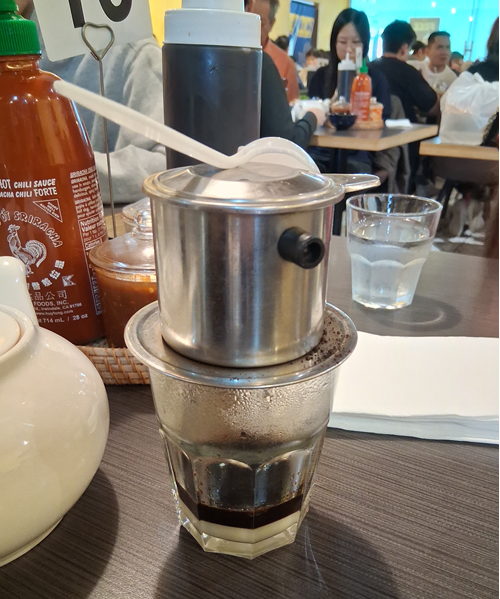
    2. Except, unfortunately, the food is perhaps remarkable. Where else can you tear into sauce-soaked Ethiopian injera, have a deathly-spicy Tibetan tripe dish and drink Vietnamese coffee so friggin dark that I had to ask “where is the condesed milk” and they said “oh, it’s in there” and it just tasted like the deepest darkest chocolate. ↩︎
  • Toronto Historical Streetview

    Back in 2018, Google’s “Sidewalk Labs” was trying to romance Toronto into creating a dystopian surveillance neighbourhood because progress.

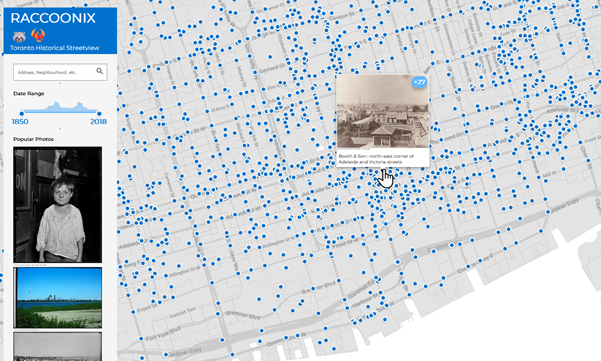
    As part of their charm offensive, they created “oldto.sidewalklabs.com”. It was a kind of Google Streetview with back-in-time photos of different locations in Toronto. The photos were sourced from the City of Toronto’s Archives and the Toronto Public Library.

    After the pandemic, the site disappeared – but the team that built it had open-sourced it. I’ve wanted to revive the site for about 5 years.

    And it’s finally revived!

    > Check it out at raccoonix.jacobfilipp.com <

    It turns out that the site was already revived at oldto.org, by the fantastic Back Lane Studios team. They put on various events that have to do with documenting Toronto’s history.

    As of today (March 2, 2026) my site includes Toronto Public Library images that oldto.org does not – but I will be sharing them with the BLS team.

    Future work:

    Next, I will attempt to find updated links to each photo on the City of Toronto Archives – all their item links are broken.

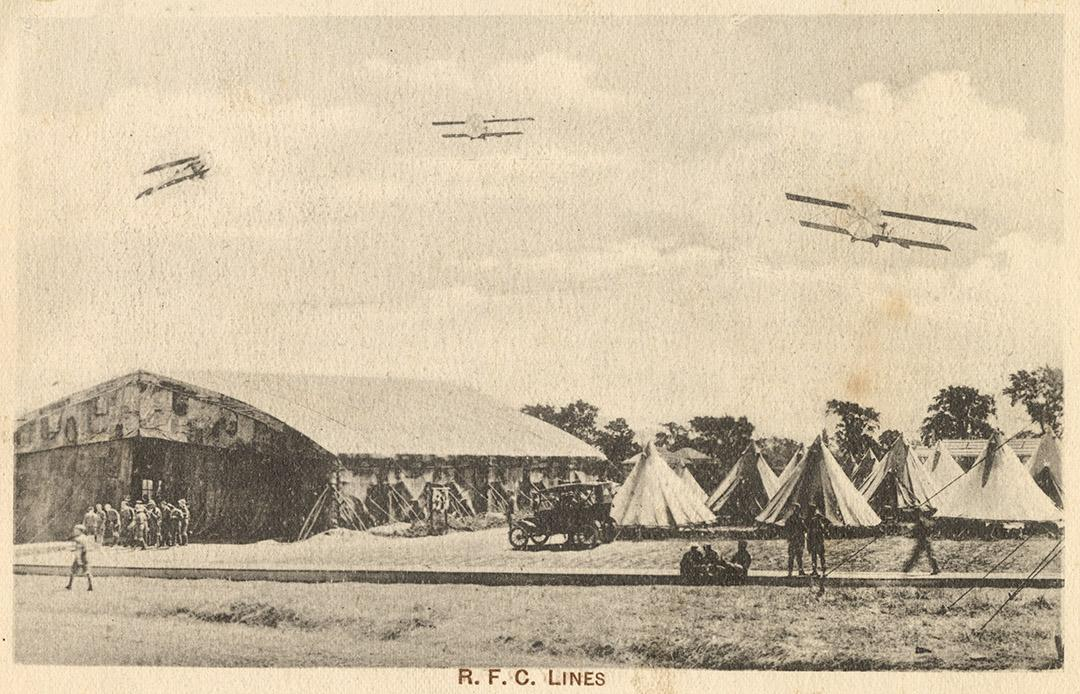
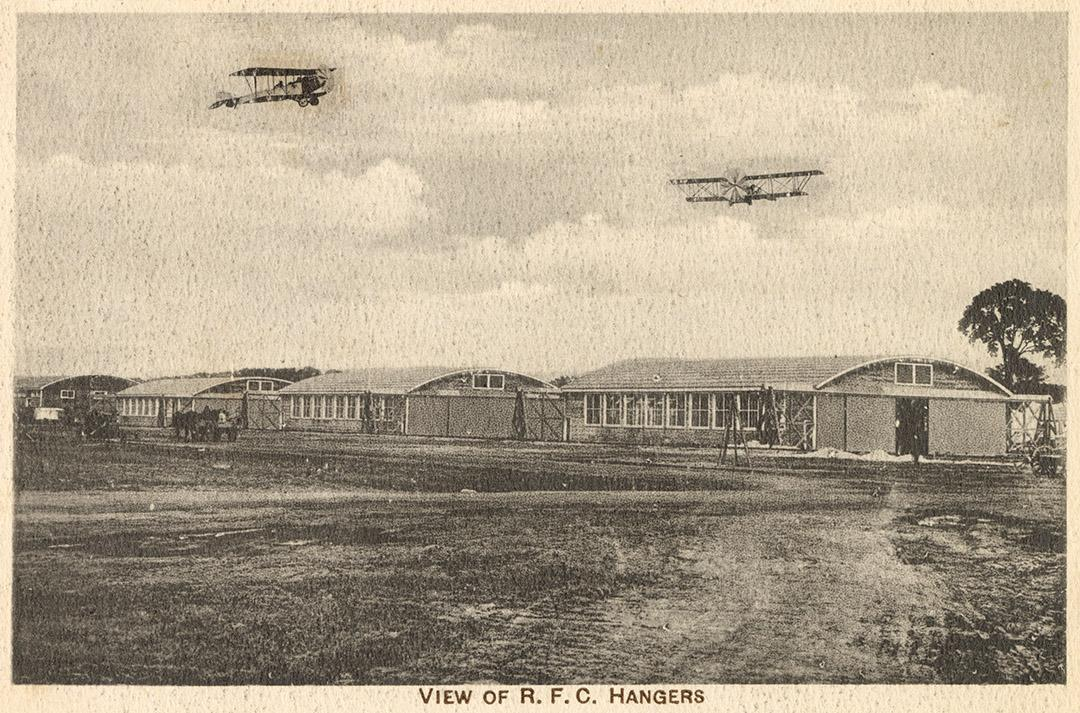
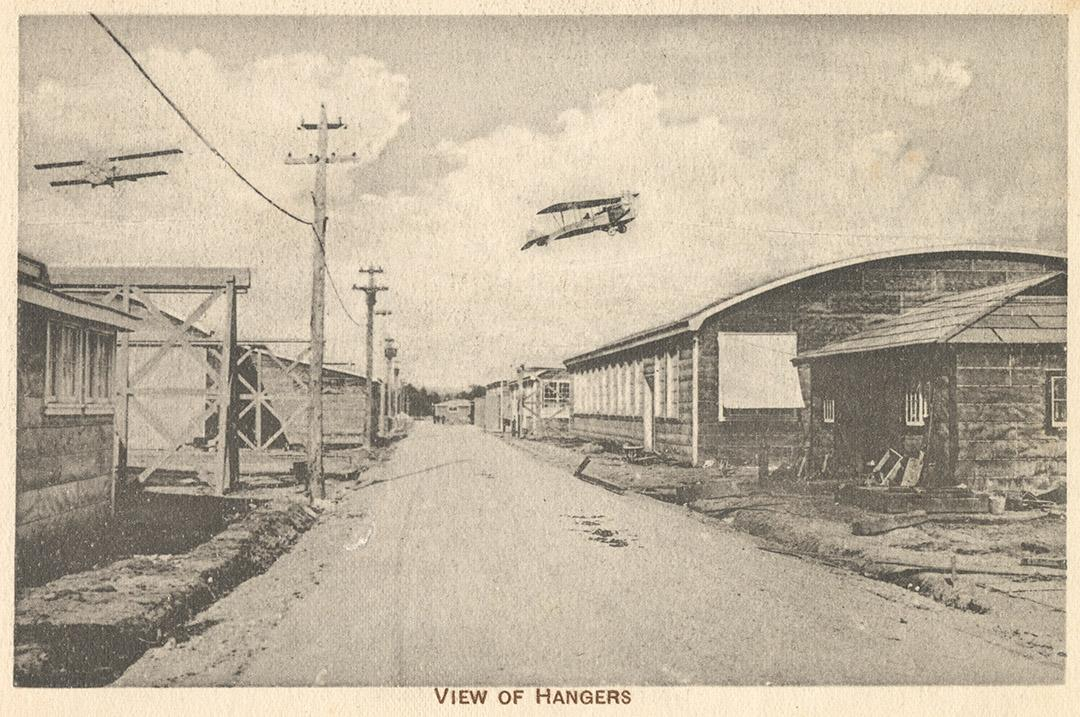
    I would like to also fill in the picture gaps for the fascinating Leaside neighbourhood – home to an aerodrome and other aviation enterprises.

    There is also a booklet of clippings related to the Aerodrome at the Toronto Public Library that I could examine: https://tpl.bibliocommons.com/v2/record/S234C1555791

  • All Records: Digital Archives Ontario

    This is where you can find metadata for the 187,407 records stored in the Digital Archive of Ontario. 3,174 of those records have digital images hosted on my site, and available for download.

    I’ve been working on a project that required this data. The Digital Archive serves it up in chunks, and I decided to make it available publicly as 1 file. This data was downloaded on February 11, 2026. Get the data here:

    The 3,174 images are ones that specifically depict locations in Toronto (for the Raccoonix map). They are available here:

    https://raccoonix.jacobfilipp.com/TPLimages


    These are the “/preview” quality images from the Archives site. Their file names are numbered according to the primaryMedia.value in the .json file.

    Each record in the JSON array is structured like this:

    {
    "sourceId": {
    "label": "Source ID",
    "value": "351994"
    },
    "primaryMaker": {
    "label": "Primary Maker",
    "value": "Salmon, James V. (James Victor)"
    },
    "primaryMedia": {
    "value": "src: https://digitalarchiveontario.ca/internal/media/dispatcher/2141122/full"
    },
    "displayDate": {
    "label": "Date",
    "value": "1957"
    },
    "invno": {
    "label": "Object number",
    "value": "PICTURES-R-352"
    },
    "id": {
    "label": "Id",
    "value": "7867983"
    },
    "title": {
    "label": "Title",
    "value": "T.T.C., McCaul Loop, McCaul St., east side, north of Renfrew Place"
    }
    }

    Some notes:

    ElementDescription
    Sourceid.valuecan be used to compose the URL of the object’s record on the official site. So “351994” can become https://digitalarchiveontario.ca/objects/351994/
    invno.valuethis is the same field as the “object number” on the item’s official webpage
    primaryMedia.valueIf you change the endings of the URL to /full, /thumbnail and /preview then you will get 3 different image sizes
    displayDate.valueValues don’t have a set format. You will see blanks, and values like:
    1850
    7/18/1985
    1827-1838
    approximately 1918
    n.d.
    March, 1985
    27 June 1990
    October 27, 1986
    unknown

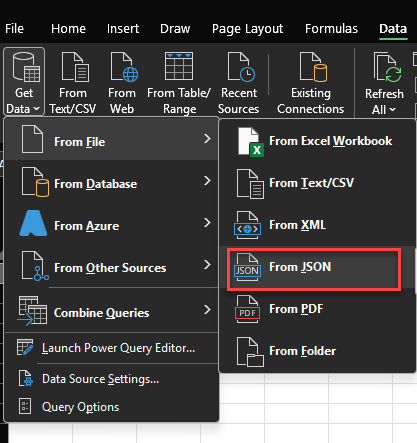
    Microsoft Excel can open JSON files and turn them into tables. If you’d like to do that, go to Data > Get Data > From File > From JSON

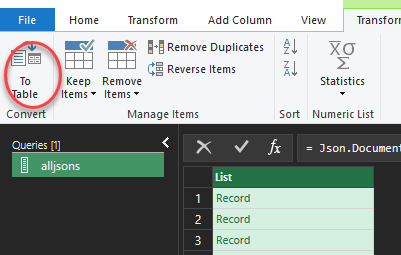
    Then choose your file, and turn “To Table” in Power Query

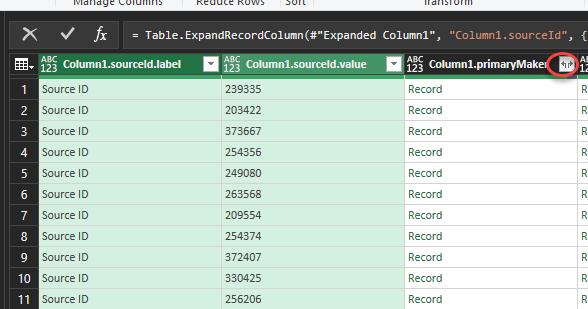
    Your “List” column will get a little “left + right arrow” icon on it, click it and click OK to “expand” the underlying fields in each row

    A bunch of new columns will appear. Go through the same process, expanding each column:

    When done, click “Close & Load”. You will get the whole dataset as a familiar Excel sheet:

  • Dragon Centre Stories

    I am a fan of Toronto’s Asian malls be they thriving, declining or already gone.

    So I was heartened to find my kindred spirits at the Dragon Centre Stories project.

    Dragon Centre was Toronto’s first Asian mall, located at 23 Glen Watford Drive. It served as the nucleus of a Chinese community that grew around it in the Agincourt neighbourhood. The mall was in decline for many years as people started spending more time at the fantastic Pacific Mall.

    Jane Law has a great writeup that includes some of the mall’s history and the racial tensions it sparked.

    The mall shut down for redevelopment in 2019, but before it did, several people contributed their memories of the mall for you to read.

    Hallway at Dragon Centre Mall during its later days. (source)
    Memory notes at a Dragon Centre commemoration event organized by Howard Tam. Source.

    As of 2025 the mall is still standing, unused. The site has not been redeveloped into condominiums and it appears that the mall was sold in 2023.

    Other declining malls

    I really like Chinatown Centre mall, at Spadina and Dundas downtown. They put on a great cultural show for Chinese New Year, and it is a favourite for my family and I. The mall is in decline for an interesting set of reasons that are described in this Reddit thread.

    Recently, a set of art-kids, goths and fashion designers have been breathing new life into this old mall (Doll Funeral and Level 1313 are particularly notable).

    Another notable declining mall is Splendid China Mall, just south of the wonderful Pacific Mall. It is very clean but has few visitors. Here’s a writeup about Splendid China Mall from 2012 – things have gotten even sadder, but Graceful Vegetarian is a real winner and we make the trip to the mall just to eat there (you must get the “steamed vegetarian tender beef with turnips”. And the “deep fried Chinese bun” – fried steamed buns with condensed milk).

    One popular spot that recently opened is Thai restaurant Koh Lipe.

    Splendid China Mall’s central stage (Source)

    Lately, I also noticed some unique stores popping up in the mall – selling flowers made out of metal wire and nylon fabric & a business run by a young woman who’s a wizard at growing unusual succulents and cacti (Sunshine Garden).

    Do you have a favourite story from one of these malls? Please share in the comments!

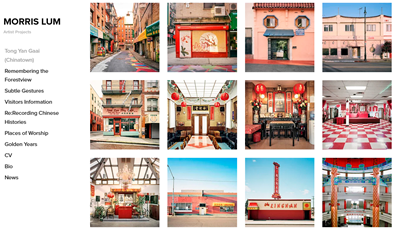
    Bonus from March 2026: if you like Chinese malls and Chinatowns, check out Morris Lum’s photography book “Tong Yan Gaai” (Chinatown).